Secondary Containment for Fuel & Diesel Tanks

Fuel Tank Containment Solutions
Secondary Containment Solutions for Fuel and Diesel Tanks
Secondary containment for fuel tanks is essential for facilities handling, storing, or transferring fuel. These solutions, placed under steel tanks, pillow tanks, and other systems, swiftly contain leaks or spills. Built with robust materials, they support SPCC plans and help reduce environmental risk. Confirm required containment volume and material compatibility with your SPCC plan and the engineer or EHS manager who certifies it.
Looking for Secondary Containment solutions? We can help! Call us at 1-863-261-8388 or contact us to discuss your needs.
Spill Containment Berms
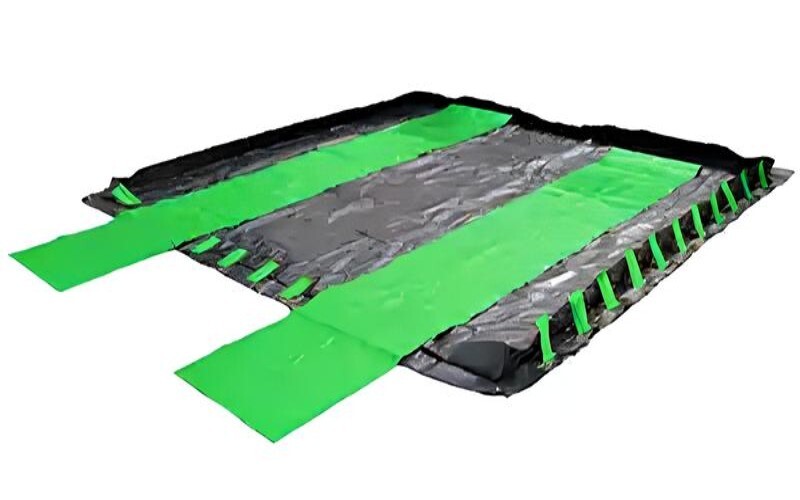
Spill containment berms are flexible, durable solutions for secondary containment under tanks and fueling vehicles. Made from robust fabrics, they're easy to transport, foldable for storage, quick to set up in emergencies, and resistant to various chemicals, ensuring reliable protection. Their design also allows for customization in size and shape, accommodating diverse site needs.
Diesel Fuel Containment Berms
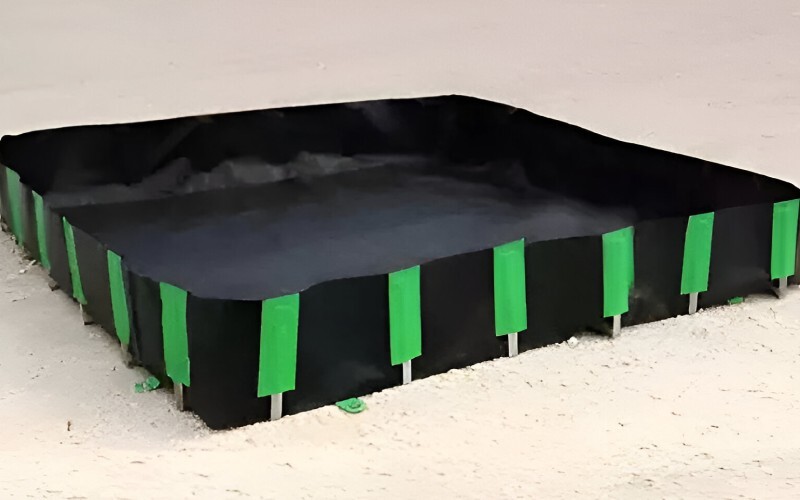
Explore why diesel fuel containment berms are essential for maintaining compliance and preventing leaks at your site. These robust barriers ensure environmental safety by effectively containing spills, providing peace of mind and regulatory adherence for your operations. Built for durability, they are designed to withstand challenging site conditions.
Drive Through Berms
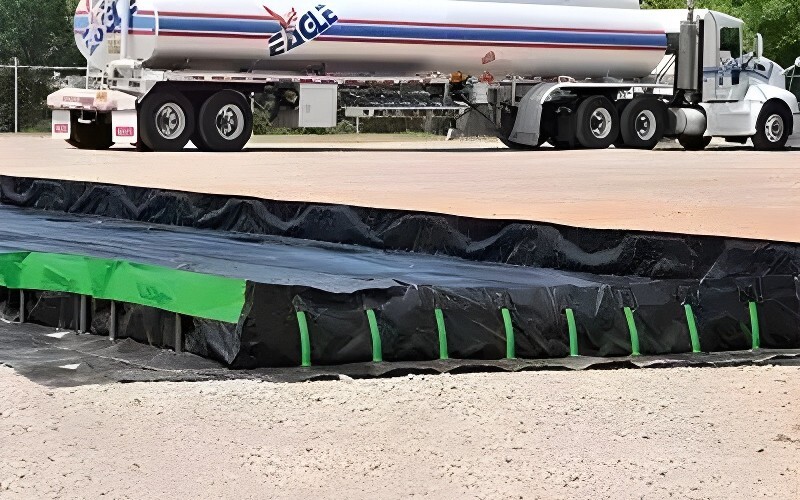
Discover Drive Through Berms designed for safe containment of tankers, drums, vehicles, and frac tanks. With self-rising foam walls, they offer easy and reliable storage solutions, available in both standard and custom sizes. Built to withstand heavy traffic and rough conditions, these berms are durable for high-activity sites and help prevent environmental contamination by capturing potential leaks and spills.

Spill Containment Liner
Explore our spill containment liners, designed to safeguard sites handling hazardous materials like fueling areas, deicing stations, and construction sites. Crafted from durable materials such as Elvaloy, Polyurethane, LLDPE, and PVC, these flexible liners fit various specifications and are ideal for placement under fuel tanks, pillow tanks, and more, ensuring effective protection against spills and leaks.
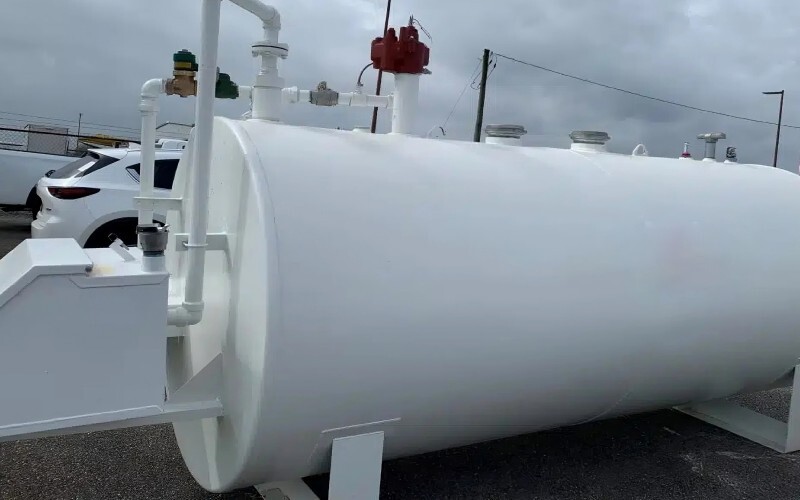
Dike Tanks
Explore our Above Ground and Underground Steel Tanks, built from high-quality steel to UL-142 standards, designed for secure storage of hazardous liquids like petroleum and chemicals, ensuring durability and safety for flammable materials. Available in multiple sizes, these tanks provide versatile storage solutions for both industrial and commercial applications.
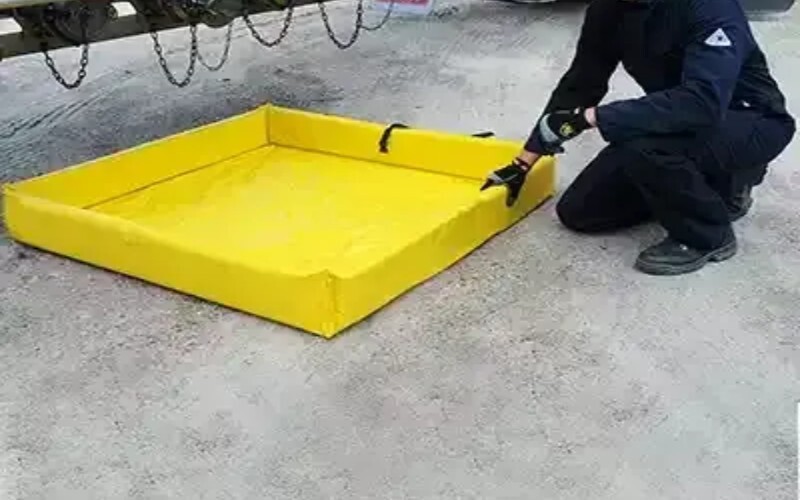
Spill Basins
Explore our flexible spill basins – perfect for storing small equipment, paint cans, pails, bottles, and tools. Quick to deploy, our mini spill containment berms offer swift, hassle-free solutions for emergencies and temporary storage needs. Ideal for fast and economical containment whenever you need it, they are durable and reusable for multiple applications.
Frequently Asked Questions
What Capacities Do Bolted Steel Fire Tanks Reach?
Bolted steel fire tanks are engineered to your specifications rather than built to a fixed size, so capacity is matched to the project, from commercial reserves up to large municipal and industrial volumes. Because each tank is custom-configured, the most accurate way to set capacity is to size the reserve against your required fire flow and duration, then request an engineered quote and a Sales Specialist will confirm the configuration for your site.
What Coatings Are Available?
The tanks are powder-coated galvanized or epoxy-lined for corrosion resistance. For potable water storage, ANSI/NSF 61-certified liners are available, and custom coatings and linings can be specified for chemical compatibility. The right finish depends on what you are storing and the environment, so confirm the coating with a Sales Specialist for your configuration.
How Are Bolted Tanks Assembled On Site?
Bolted steel tanks use a modular design built from precision-engineered straight seam flat steel panels that ship efficiently and bolt together on site. This lets them assemble in confined or remote installation locations a welded tank cannot reach, and turnkey installation services are available to handle the build end to end. Confirm site access and the installation scope with a Sales Specialist before you order.
Are Bolted Steel Fire Tanks Standards-Compliant?
Yes. The tanks are built to AWWA D103-09 and NFPA 22 compliance, the recognized standards for water storage and private fire-protection supply. Requirements vary by jurisdiction, so confirm which edition and certifications your authority having jurisdiction expects, and a Sales Specialist can verify what your configuration meets.
Can A Bolted Steel Tank Store Potable Water And Other Liquids?
It can. With ANSI/NSF 61-certified liners the tanks are suited to potable and non-potable water, and they are also used for process water, wastewater, rainwater harvesting, agricultural irrigation, food-grade liquids, and frac and industrial chemical storage. They are suitable for both liquid and dry bulk materials. Match the liner and coating to what you are storing.
What Is The Difference Between Bolted And Welded Storage Tanks?
The main difference is how the tank arrives and goes together. A bolted steel tank ships as factory-fabricated panel sets and bolts together on site, so it can be assembled in confined or remote installation locations that crane-set welded construction cannot reach, and panel sets ship more efficiently than a completed shell. A welded tank is fabricated as a continuous shell and typically requires field welding or crane placement. If site access, shipping, or installation logistics are a constraint, bolted construction is usually the more practical route; a Sales Specialist can talk through which fits your project.
Are Stainless Steel Bolted Tanks Available?
Bolted tanks on this page are carbon steel with powder-coated galvanized or epoxy finishes, which cover most water and liquid storage duties. For applications that call for a stainless interior, review our stainless steel tanks or ask a Sales Specialist about material options when you request a quote.
Looking for Secondary Containment solutions? We can help! Call us at 1-863-270-8118 or contact us to discuss your needs.