














Fire Water Storage Requirements
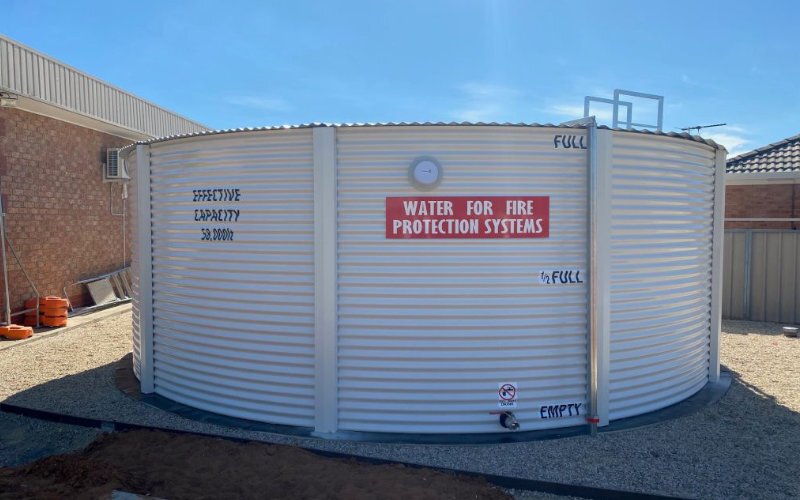
Fire Water Storage Requirements
Fire water storage tank requirements come down to one question: does your site keep enough usable water on hand to run its fire protection system for as long as that system must operate? The answer depends on the required fire flow your system must deliver and the duration it must sustain, both set by your fire protection engineer and your local authority. This page walks through the factors that shape those requirements at a concept level, then hands off to NFPA 22 sizing and the fire protection water tanks built for the job.
Need help specifying a fire water storage tank? Call us at 1-863-261-8388 or contact us to talk through your requirements.
Overview
What Fire Water Storage Tank Requirements Cover
At a concept level, fire water storage requirements address three things: how much usable water the system must have, how that water is kept available and protected, and the connections and features the tank needs to deliver it on demand. NFPA 22 is the standard that governs the tank itself, the construction types that are acceptable, the coatings and fittings, and how stored water is kept ready for its protective duty. The demand the tank must meet, the required fire flow and the duration, comes from the fire protection system design, not from the tank standard alone.
In practice you work with three inputs. First, a defined volume of water that stays usable for fire protection. Second, construction and coatings suited to the water, the site, and the service life expected. Third, the connections, level indication, and protective features that let the system draw water reliably when it is called for. The figures that turn those inputs into a specific tank are set by the system designer and the local authority, and the sections below describe what shapes them.
Spec Factors
Factors That Drive Required Fire Water Storage
These are the inputs that shape selection. This is a set of factors, not a calculator, and the final figures come from your engineer and your AHJ.
| Factor | What It Influences | Who Sets It |
|---|---|---|
| Required Fire Flow | The volume of water the system must deliver per unit of time. | Fire protection engineer, per applicable code. |
| Required Duration | How long that flow must be sustained, which sets total stored volume. | Fire protection engineer and the AHJ. |
| Hazard Or Occupancy | The flow and duration the code calls for at the site. | Applicable code and the AHJ. |
| System Served | The demand profile, such as sprinklers, hydrants, or standpipes. | Fire protection system design. |
| Supply Role | Whether the tank is the sole source or a supplemental reserve. | Project design and the AHJ. |
| Usable Vs Gross Volume | The net water available above the discharge outlet, and the sizing margin needed. | Tank configuration and NFPA 22. |
Selection
Applying It To Product Selection
Once the required volume and duration are established, selecting a tank is about matching usable capacity, construction, and fittings to that duty. Browse the tanks configured for fire protection supply, or ask a Sales Specialist to confirm a configuration for your site and water service.
Shop Fire Protection TanksDocumentation
Certification And Documentation
Fire protection projects are documented projects. The reference frameworks that may apply to a water tank supply include:
- NSF standards for potable water contact, where applicable
- AWWA references for steel water storage construction
- NFPA 22 for the private fire protection application
We provide the documentation a specifier needs to support submittal and review. Which certifications and reports apply depends on the tank type, coating, and intended water service for your project.
To receive the documentation set for a specific configuration, request a spec sheet and a Sales Specialist will confirm what applies. The construction, coating and fitting side of the specification is covered in our fire protection tank specifications guide.
Confirm Final Figures With Your AHJ
This guide is informational and concept level. It does not size a system and is not a substitute for engineered design. Confirm all final figures, capacities, and compliance determinations with your Authority Having Jurisdiction and your fire protection engineer before specifying or ordering.
Keep Exploring
Related Specs And Products
NFPA 22 Sizing
How sizing inputs come together for a fire reserve.
Read GuideFire Tank Specifications
Materials, coatings, fittings and the standards that apply.
Read GuideFire Protection Tanks
Browse tanks configured for suppression supply.
View TanksTank Containment
Secondary containment for stored volume protection.
View ProductsFAQ
Fire Water Storage Requirements FAQ
What Determines Required Fire Water Storage?
Two inputs do most of the work: the fire flow your protection system must deliver and the duration that flow must be sustained. Together they set the volume the tank must hold. The hazard or occupancy being protected, the type of system served, and whether the tank is the sole or a supplemental supply all influence those inputs. NFPA 22 governs the tank; the demand figures come from the system design.
Who Sets The Requirement For My Site?
Your fire protection engineer and the local Authority Having Jurisdiction. The AHJ enforces the applicable codes, and the engineer translates them into a required fire flow and duration for your specific building, hazard, and water supply. This page is informational and does not substitute for that determination.
How Is Reserve Capacity Defined?
Reserve, or effective, capacity is the volume of water actually available to the fire protection system, which is the usable water above the tank's discharge outlet. Water below the outlet is not counted toward the protective reserve. Gross tank capacity and usable capacity can differ, so selection accounts for the net volume the system can draw.
Request A Spec Sheet Or An Engineered Quote
Tell us the system you are protecting and we will return the documentation set for your configuration. A Sales Specialist confirms what applies before you specify or order.