














Chemical Tank Compatibility Spcc
Chemical Compatibility & SPCC for Chemical Tanks
Choosing the right chemical tank comes down to two questions a specification conversation should settle early: will the tank material stand up to what you are storing, and how will the site contain a release if the primary tank ever fails. Chemical tank compatibility is the match between a tank's construction and the specific chemical inside it, judged against the chemical's identity, concentration, temperature, and specific gravity. Containment planning, including the federal SPCC rule for oil, answers the second question.
This guide explains how to think about both at a concept level, then points you to the verified sources that carry the exact ratings and figures. It does not rate any chemical against any tank. That confirmation belongs to the tank manufacturer and your engineer.
Looking for chemical storage solutions? We can help! Call us at 1-863-323-0717 or contact us to discuss your needs.
Overview
What Chemical Tank Compatibility And SPCC Cover
Two separate ideas sit behind this page, and it helps to keep them apart. The first is compatibility: whether the tank material will hold the chemical over its service life without degrading. Tanks are built from families of materials such as polyethylene, fiberglass reinforced plastic, carbon steel, and stainless steel, and each resists a different set of chemicals. Whether a given material suits a given chemical depends on the chemical's identity, its concentration, and the temperature it is stored at, so compatibility is always confirmed against the tank manufacturer's chemical resistance data rather than assumed from the material name alone.
The second idea is containment: what holds the chemical if the primary tank leaks, overfills, or fails. The federal Spill Prevention, Control, and Countermeasure rule, known as SPCC and codified at 40 CFR 112, is the piece most people mean when they say "SPCC." It is specifically an oil rule. It applies to facilities whose aboveground oil storage capacity crosses a federal threshold, and it generally calls for secondary containment sized to the largest container. Oil is defined broadly under the rule, covering petroleum products as well as animal and vegetable oils.
For acids, caustics, solvents, and other chemicals that are not oil, SPCC does not, on its own, set the containment requirement. Those obligations usually come from fire and building codes, workplace safety rules, and state or local programs instead. The practical takeaway is to confirm which framework applies to your chemical before you assume SPCC governs it. The sections below describe the factors that shape both compatibility and containment so the conversation can start from the right place.
Factors That Drive Chemical Tank Selection
| Factor | Why It Matters | Where To Confirm |
|---|---|---|
| Chemical identity and concentration | Materials resist different chemicals, and resistance can change sharply with concentration, so the exact chemical and strength matter, not the general category. | Manufacturer chemical resistance data for the exact material and resin |
| Operating temperature | Higher temperature can reduce a material's resistance and derate the tank. Polyethylene tank standards even define tank types by continuous service temperature. | Manufacturer spec sheet and your engineer |
| Specific gravity | Poly and fiberglass tanks carry a maximum specific gravity rating. The tank must be rated at or above the specific gravity of your chemical. | Tank spec sheet |
| Fittings, gaskets, and venting | Outlets, gaskets, and vents must suit the chemical and its fumes, not just the tank wall. A compatible tank with an incompatible fitting still fails. | Manufacturer spec sheet |
| Secondary containment | Whether containment is required, and how it is sized, depends on the chemical, the volume stored, and the jurisdiction. | Applicable rule, your AHJ, or your EHS lead |
| Site conditions | UV exposure, freeze potential, and seismic or wind loads affect material choice and installation. | Your engineer and local code |
Product Selection
Applying It To Product Selection
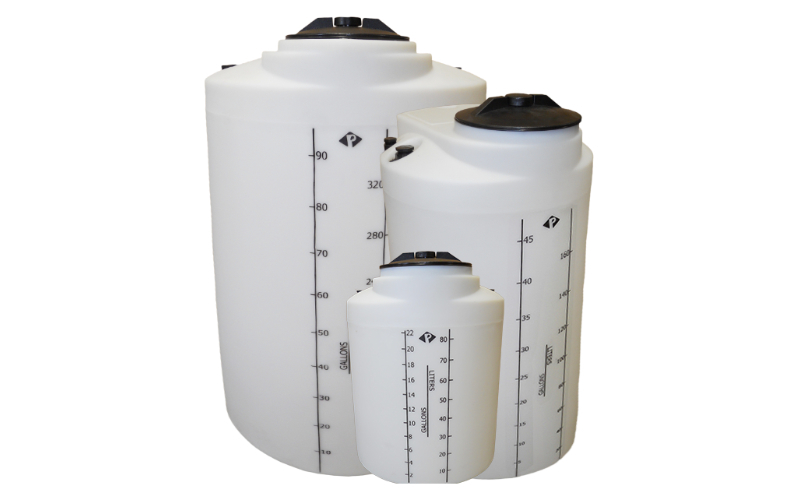
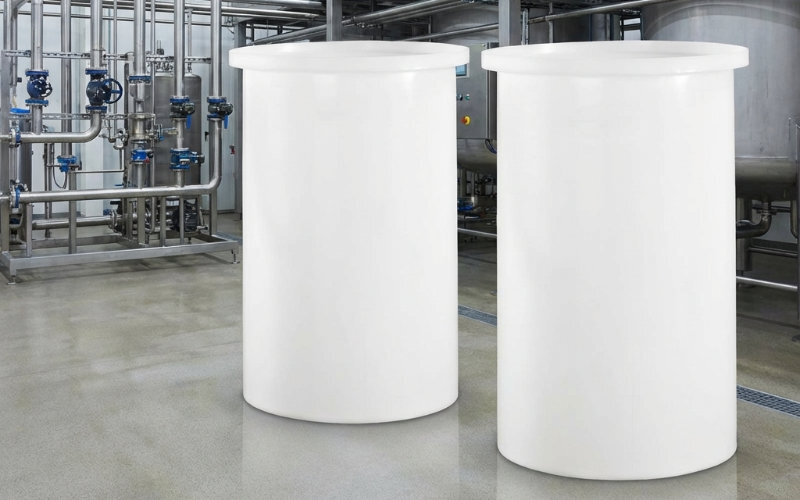
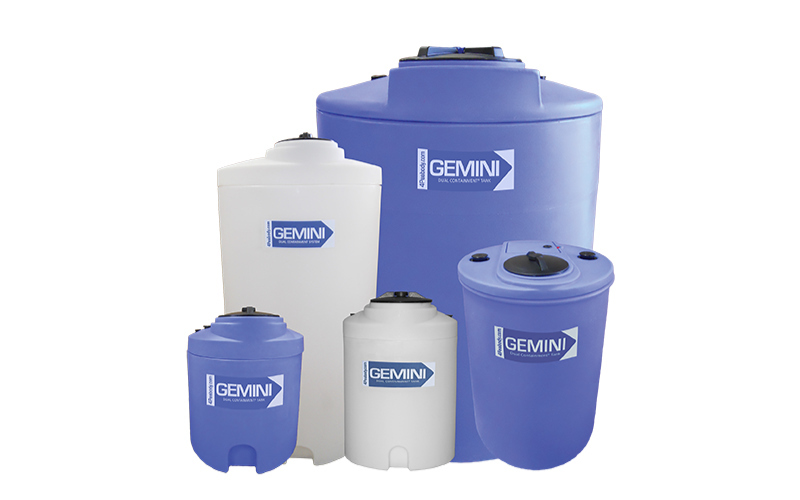
Before you compare tanks, screen your chemical against common plastic materials with our Chemical Compatibility Tool. Once you know which material family suits your chemical, you can narrow to a specific tank. Our chemical storage tanks span polyethylene, fiberglass, and steel constructions across a wide range of capacities, so you can match the build to your chemical and duty. For higher-hazard or process service, the industrial chemical storage tanks range carries heavier-duty options. Whatever tank you land on, plan the secondary containment alongside it, sized for the release you need to catch, so compatibility and containment are specified together rather than as an afterthought.
 Chemical Storage Tanks
Poly, fiberglass, and steel tanks across a range of capacities. Match the build to your chemical and conditions.
Shop Chemical Tanks
Chemical Storage Tanks
Poly, fiberglass, and steel tanks across a range of capacities. Match the build to your chemical and conditions.
Shop Chemical Tanks
 Industrial Chemical Storage Tanks
Heavier-duty and process-grade storage for demanding industrial chemical service.
Shop Industrial Tanks
Industrial Chemical Storage Tanks
Heavier-duty and process-grade storage for demanding industrial chemical service.
Shop Industrial Tanks
 Secondary Containment
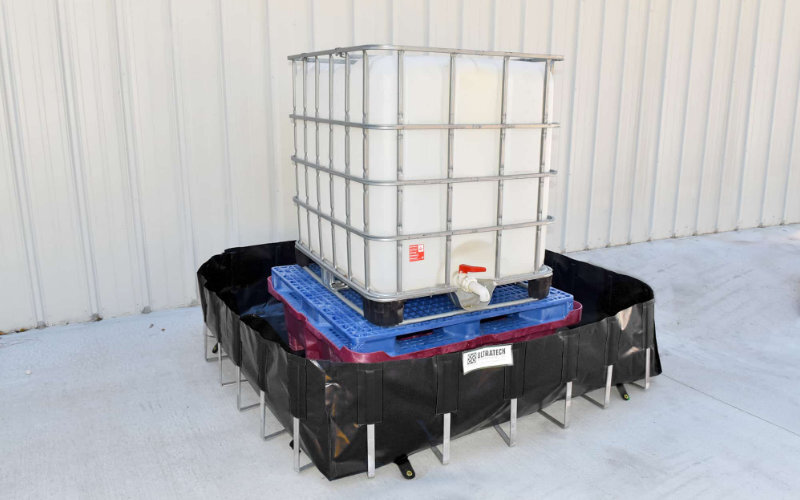
Basins, berms, and containment systems to catch a release before it spreads.
Shop Containment
Secondary Containment
Basins, berms, and containment systems to catch a release before it spreads.
Shop Containment
Documentation
Certification And Documentation
Chemical storage is a documented decision. The reference frameworks that may apply to a chemical tank supply, depending on the material and the service, include:
- ASTM D1998 for polyethylene upright storage tank construction, where applicable
- NSF standards for potable or food-grade contact, where applicable
- Manufacturer chemical resistance documentation for the specific resin or alloy
We provide the documentation a specifier needs to support submittal and review. Which references and reports apply depends on the tank material, the chemical, and the operating temperature for your project.
To receive the documentation set for a specific configuration, request a spec sheet and a Sales Specialist will confirm what applies.
Confirm Compatibility And Final Figures With Verified Sources
This guide is informational and concept level. It does not confirm that any tank is compatible with your chemical, and it does not size containment. Confirm material compatibility against the tank manufacturer's chemical resistance data for your exact chemical, concentration, and temperature. Confirm whether SPCC or another containment requirement applies, and how containment must be sized, with your Authority Having Jurisdiction, environmental engineer, or EHS lead before specifying or ordering.
Keep Exploring
Related Specs And Products
Chemical Storage Tanks
Browse tanks by material and chemical duty.
View TanksIndustrial Chemical Storage Tanks
Larger and process-grade chemical storage.
View TanksSecondary Containment
Containment systems sized to catch a release.
View ProductsTank Containment
Secondary containment for stored volume protection.
View ProductsFAQ
Chemical Compatibility And SPCC FAQs
How Do I Check If A Tank Is Compatible With My Chemical?
Start with the chemical's identity, concentration, and operating temperature, then check those against the tank manufacturer's published chemical resistance data for the exact material and resin. Specific gravity matters too, and the tank has to be rated at or above your chemical's specific gravity. General assumptions are not enough. Confirm the rating for your specific conditions before you order, and ask a Sales Specialist for the documentation.
Do Chemical Tanks Require Secondary Containment?
It depends on the chemical, the volume stored, and your jurisdiction. The federal SPCC rule specifically covers oil storage above set thresholds and calls for containment sized to the largest tank. On its own it does not cover most industrial chemicals. For acids, caustics, and other non-oil chemicals, containment obligations usually come from fire code, workplace safety rules, or state and local programs. Confirm what applies with your AHJ or EHS lead, and pair the tank with secondary containment sized for the release you need to catch.
Where Do I Find A Compatibility Chart?
Start with our Chemical Compatibility Tool, which lets you search by chemical or material to screen HDPE, LDPE, and polypropylene tanks. Treat the result as a first pass, not a final answer. Its ratings are based on published data for virgin resins at ambient temperature, so confirm the exact rating for your concentration and temperature against the tank manufacturer's chemical resistance data and the chemical's Safety Data Sheet before you order. For materials the tool does not cover, such as fiberglass or steel, ask a Sales Specialist and we will point you to the right manufacturer documentation.
Request A Spec Sheet Or An Engineered Quote
Tell us your chemical, concentration, temperature, and volume. A Sales Specialist will confirm the compatible tank options and the containment that fits.