
Rainwater Harvesting Calculator
Estimate Your Collection Potential & Tank Size
A rainwater harvesting calculator turns two simple numbers, your roof size and your local rainfall, into a realistic estimate of how much water you can collect and the tank size to start with. Use the calculator below to size your setup, then read on for how to read the results and choose the right tank.
Rainwater Harvesting Calculator
Estimate how much rainwater you can collect from your roof, and the tank size to start with.
Based on the standard estimate that one inch of rain on one square foot yields about 0.623 gallons. Results are an estimate for planning. Actual yield varies with roof condition, gutters, first-flush diversion, and evaporation. The suggested tank size buffers roughly one to two months of collection. Your ideal size also depends on how you use the water and how long your dry spells run.
How to read your results
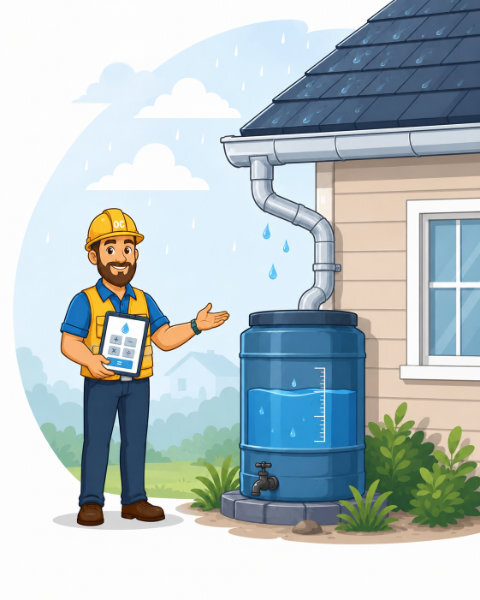
The calculator gives you three figures.
Annual yield
The total gallons your roof can realistically capture over a year.
Monthly average
That yearly figure spread across twelve months, so you can picture a typical month, though real rainfall arrives in bursts rather than evenly.
Suggested tank size
A sensible starting point that buffers a month or two of collection between rains.
If you plan to rely on stored rainwater through long dry spells, size up from there.
What affects how much rainwater you can collect
Four things drive your real-world yield.
Choosing a tank for rainwater harvesting
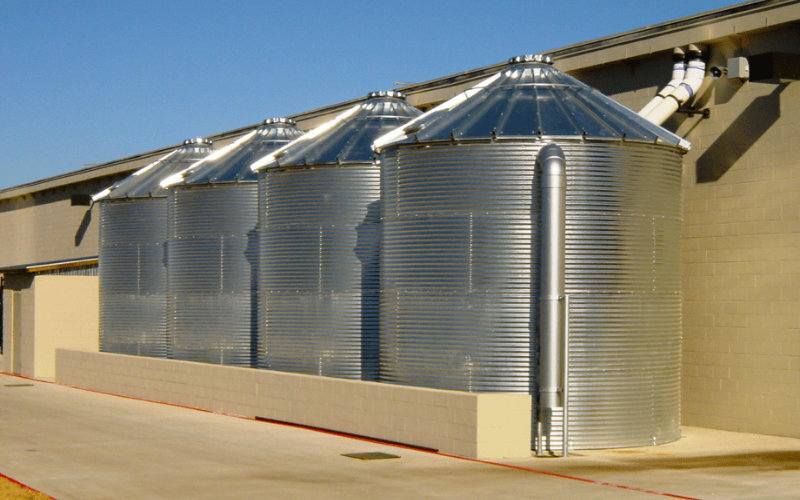
Once you know your numbers, the next decision is the tank itself. For most setups, an above-ground rainwater collection tank is the simplest place to start. If you want the tank out of sight or need to protect it from freezing, an underground rainwater tank is worth considering. Corrugated steel rainwater tanks suit larger rural properties, while plastic rainwater tanks are the lightweight, lower-cost option. If you are bringing an existing cistern back into service, a new cistern liner can do it without a full replacement.
Still mapping out how the whole system fits together? Our guide on how a cistern works walks through collection, storage, and delivery, and what size cistern do I need is a good way to cross-check the tank size the calculator suggested.
Rainwater harvesting FAQs
How much rainwater can I collect from my roof?
As a rule of thumb, one inch of rain on one square foot of roof yields about 0.623 gallons. The calculator above applies that to your roof size, rainfall, and roof surface to give a realistic annual figure.
Is harvested rainwater safe to drink?
Rainwater collected for potable use generally needs filtration and treatment, and requirements vary by area. Confirm the rating you need and check your local regulations before using harvested water for drinking.
What size tank do I need for rainwater harvesting?
It depends on your roof, your rainfall, and how you use the water. The calculator suggests a starting size that buffers a month or two between rains, and our cistern sizing guide helps you refine it.
Do I need a first-flush diverter?
A first-flush diverter sends the initial, dirtiest runoff away from the tank and noticeably improves stored water quality. It is a small addition that most harvesting setups benefit from.
When you are ready, find the right fit or let our team help you spec a larger setup.