
How a Septic System Works
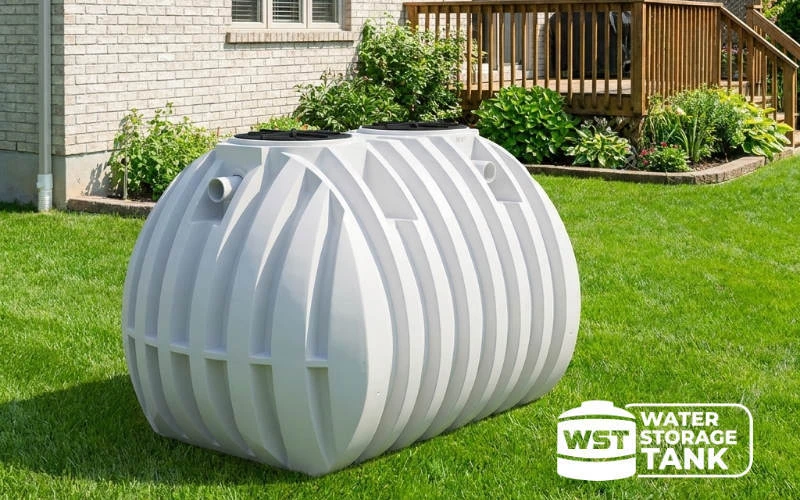
If your home is not connected to a municipal sewer, a septic system quietly handles all of your wastewater on site. Understanding how a septic system works makes it far easier to maintain one, spot a problem early, and choose the right tank. Here is what happens from the moment water leaves your house.
In short: wastewater flows from your home into a septic tank, where solids settle out and bacteria break them down. The clarified liquid then flows to a drain field, where the soil filters it naturally before it returns to the groundwater.
The parts of a septic system
Every conventional septic system has three working parts. The septic tank does the primary separation and treatment. The drain field, also called a leach field, disperses the treated liquid into the ground. And the soil itself is the final filter, removing the last contaminants before the water rejoins the water table. Together they treat and dispose of everything your household sends down the drain, with no connection to a city sewer.
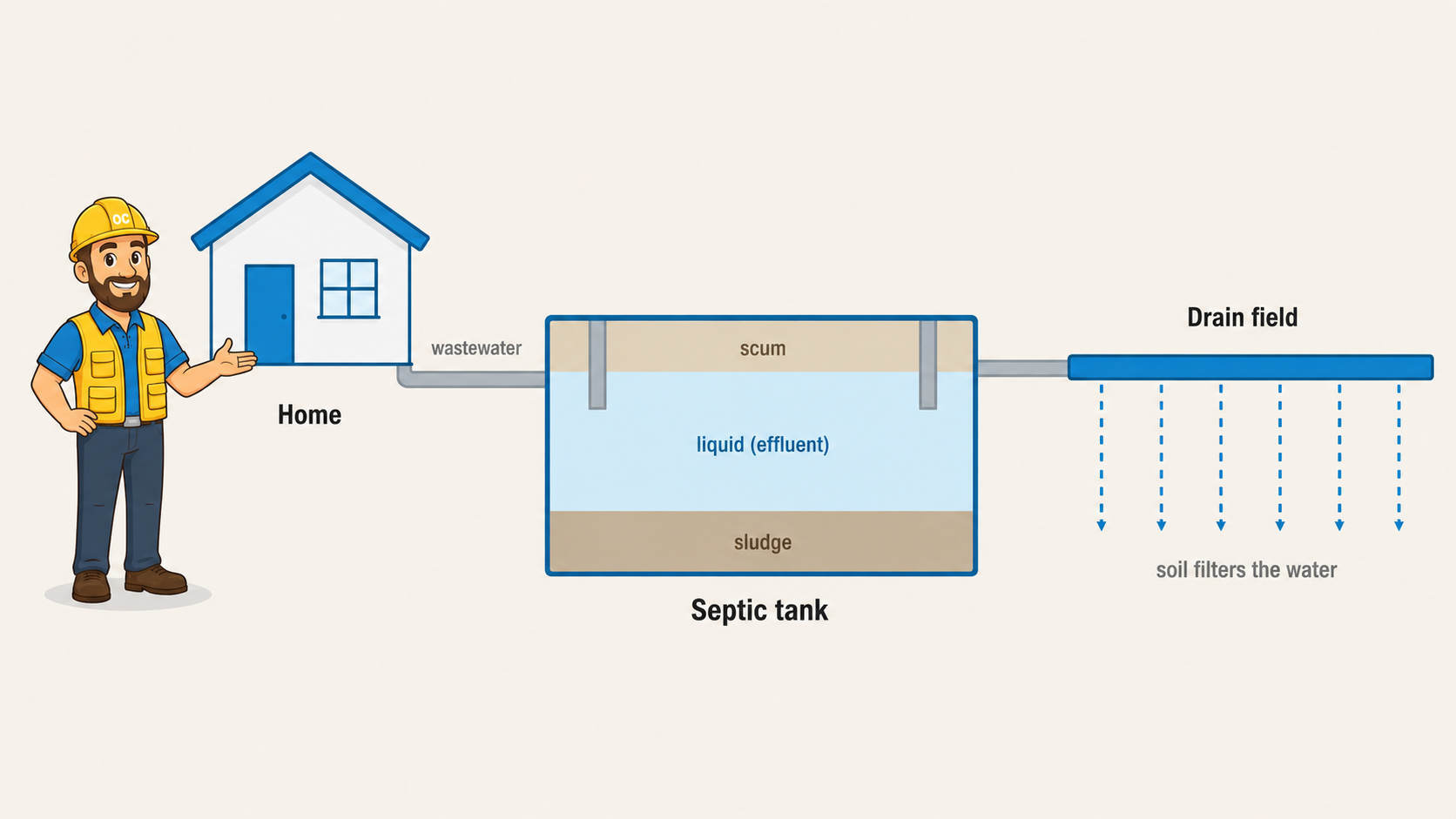
How a septic system works, step by step
The role of bacteria
The quiet workhorse of a septic system is bacteria. The same microbes that digest waste in the tank are what keep the whole system flowing. That is why harsh chemicals, large amounts of bleach, and antibacterial products can hurt performance: they kill off the bacteria the system depends on. A septic system is a living process, not just a container.
Keeping a septic system healthy
A well-kept septic system can last for decades. Pump the tank every few years to remove the sludge that bacteria cannot fully break down, since letting it build up is the most common cause of failure. Watch what you flush, because wipes, grease, and chemicals all cause problems. Protect the drain field by keeping heavy vehicles and deep-rooted trees off it. And simple add-ons like a filter from our septic tank accessories, along with periodic inspection, make upkeep easier. When it is time to replace the tank, our standard and heavy-duty septic tanks cover most homes, with fiberglass options where code allows. Not sure what size you need? Try our septic tank sizing calculator, and if you are choosing between system types, our guide on septic tank vs holding tank breaks it down.
Why Innovative and Alternative (I/A) septic systems exist
Everything above describes a conventional septic system, which is very good at removing solids and pathogens. What it leaves behind is dissolved nitrogen, and that nitrogen travels with the effluent into the groundwater. In the wrong place it can pollute drinking water and feed the algae blooms that damage ponds, estuaries, and coastal waters. Innovative and Alternative systems, or I/A systems, also called enhanced nutrient-reducing systems, exist to solve exactly that problem.
How I/A septic systems work
An I/A system adds an advanced treatment stage between the septic tank and the drain field. After the tank, effluent passes through a unit that introduces oxygen and runs the water through specialized media, often textile or coconut coir fibers, that host bacteria able to convert nitrogen into harmless nitrogen gas. The water that reaches the soil is far cleaner than a conventional system delivers, with much of the nitrogen removed.
When homeowners need an I/A system
For a growing number of homeowners, an I/A system is no longer optional. They are increasingly required by law in environmentally sensitive areas, near watersheds, shorelines, and vulnerable aquifers, where nitrogen limits are strict. They also help on tight residential lots, because the enhanced treatment can shrink the drain field a site needs, making a system possible where a conventional field would not fit. If your area calls for one, your local health department or a licensed septic designer can confirm which approved system fits your site.
Septic system FAQs
How often should a septic tank be pumped?
Most tanks are pumped every three to five years, though the right interval depends on tank size and household use. Regular pumping clears the sludge bacteria cannot break down and is the single best thing you can do for the system.
What should you not put in a septic system?
Avoid wipes, grease and cooking oil, coffee grounds, harsh chemicals, and large amounts of bleach or antibacterial cleaners. Anything that does not break down clogs the tank, and strong chemicals kill the bacteria the system relies on.
How long does a septic system last?
With proper care, a septic tank can last several decades, and the drain field often lasts around 20 to 30 years. Regular pumping and protecting the drain field are what stretch a system's life.
How do I know if my septic system is failing?
Common warning signs are slow drains throughout the house, sewage odors indoors or outside, unusually lush or wet patches over the drain field, and backups. If you notice these, have the system inspected promptly.
Planning a new system or replacing a tank? Find the right one, or let our team help you spec it for your site.