Secondary Containment Liner
Spill Containment Liners
Secondary Containment for Compliance
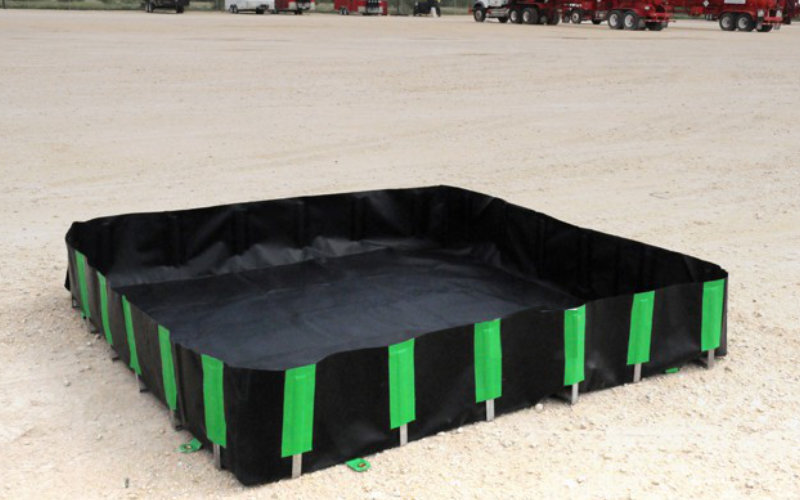
The spill containment liner is an essential solution for sites managing hazardous materials, including fueling areas, construction zones, chemical storage facilities, and industrial plants. Crafted from highly durable and flexible fabrics such as Elvaloy, Polyurethane, LLDPE (Linear Low-Density Polyethylene), and PVC (Polyvinyl Chloride), these liners provide robust, long-lasting protection against harmful liquids, chemicals, and oil spills. Their rugged construction ensures resistance to punctures, UV rays, and chemical degradation, making them ideal for demanding environments where reliable spill containment is critical for safety and compliance.
Looking for secondary containment liner? We can help! Call us at 1-863-270-8118 or contact us to discuss your needs.
Reliable Secondary Containment for Hazardous Materials
Secondary containment, regulated by the EPA and SPCC, ensures safe storage for sites handling hazardous materials. Our secondary containment liners are ideal for use under dike tanks, fuel tanks, and in tank farms or pit setups, providing effective collection of spilled or contaminated materials.
For a full walkthrough of what federal rules ask of regulated facilities, including sizing and inspection basics, see our guide to SPCC Secondary Containment Requirents
Choosing a Secondary Containment Liner or Berm
Flexible liner fabrics are offered in a range of varied materials to accommodate various liquids, sizes and temperature requirements. If you are not sure which fabric would be best for your location, please feel free to contact us with the following information:
- Type of Liquid being Stored on the Liner (ex. fuel, oil, chemicals)
- Size/Dimensions Required
- Storage Requirements (extended or short term storage)
Containment Liner Applications
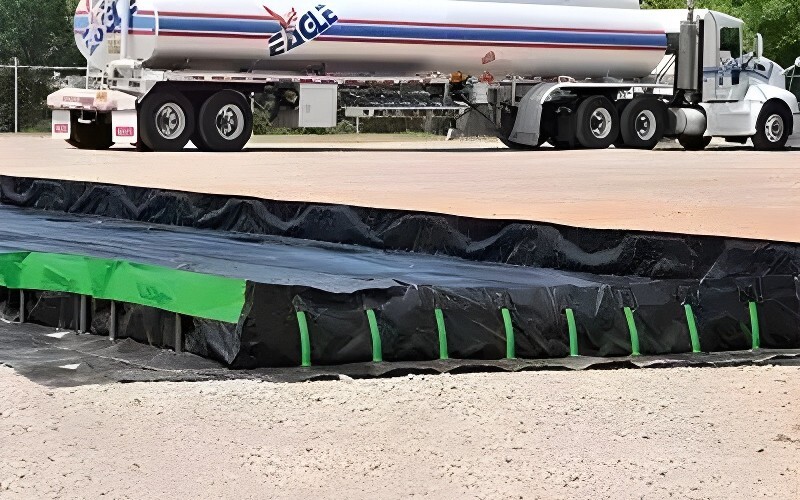
- Liners for Dike Areas
- Deicing Areas
- Frac Containment Ponds
- Waste Water Containment
- Fuel Tank Containment
Liners pair naturally with containment berms, which add sidewalls to hold spilled material, and berm replacement liners are a common request for aging units. For open ground protection under equipment or temporary storage areas, see our ground liners for spill containment.
Containment Liner Benefits
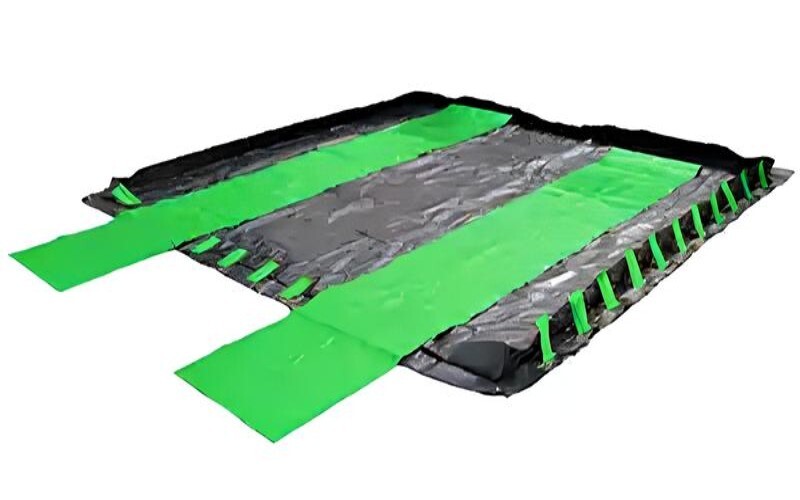
- Made to the Size Required for Your Site: no field seaming or excess folds, so the liner installs faster and seals cleaner
- Fabric Matches Liquids being Stored in the Tank: the membrane resists the specific chemical it will actually contact
- Prevents Site Contamination: keeps spills out of soil and groundwater, avoiding cleanup and remediation costs
- Protects the Bottom Exteriors of the Tanks: a barrier between the tank and abrasive ground surfaces
- Keeps Sites in Compliance with Storage Regulations: supports the secondary containment layer regulators look for during inspections
Custom Spill Containment Liners for Long-Term and Primary Storage
Spill containment liners are typically designed for short-term storage, but if you need a liner for long-term or primary liquid storage, we can help. Call us to discuss your specific requirements and find the right solution.
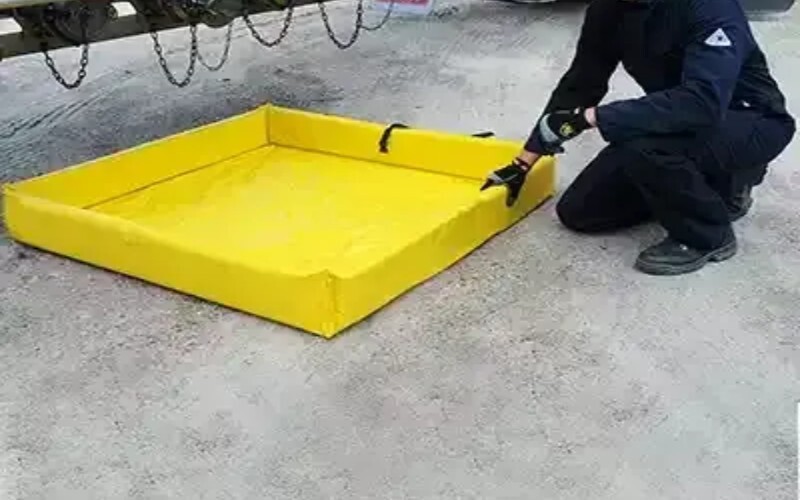
In addition to liners, Water Storage Tanks also offers a full selection of spill containment products. Spill berms will include the bottom liner as well as a side wall to successfully hold spilled materials.
Looking for primary liquid storage? As a liquid storage provider, Water Storage Tanks offers a range of tanks to successfully store liquids. Please feel free to browse through our website to find the best solution to your site's liquid storage requirements.
Containment liners for liquid storage and site protection are also available. Check it out on the Containment Liners page.
Primary Containment Liners and Secondary Containment Liners
Secondary Containment: the Backup Layer
Secondary containment never touches the stored product during normal operation. It exists for the day the tank, drum or tote fails. A secondary containment liner goes underneath and around the vessel, across a dike area, a bermed pad or a tank farm, and its job is to hold an escaped liquid off the soil and out of the groundwater long enough to recover it. This is the layer regulators look for during an inspection, and it is what this page and our berms are built for.
Primary Containment: the Liner Inside the Vessel
A primary containment liner is a different product entirely. It sits inside the tank, cistern or basin and becomes the surface the stored liquid actually contacts, which means it is specified against the contents rather than against a spill scenario. Lining a steel, concrete, wooden or corrugated tank instead of recoating or replacing it falls here, as does lining a pond, lagoon or pit. If that is what you need, start with containment liners for tanks, ponds and cisterns rather than the products on this page.
Why the Specification Is Not the Same
A primary liner is in permanent immersion, so long-term chemical compatibility governs the material choice. A secondary liner may sit dry for years, which shifts the emphasis to UV exposure, weather, puncture resistance and how the fabric performs during a containment event rather than indefinitely. The same material is not automatically correct for both roles, and specifying one for the other is a common and expensive mistake.
Matching the Liner to the Liquid
Secondary containment lining is specified around what could escape, not around what is stored on average. Tell us the liquid and we will match the fabric to it.
Fuel and Diesel
A fuel containment liner sits under bulk diesel, gasoline and aviation fuel storage, generator belly tanks and fueling areas, and it is the most common request we see. Hydrocarbon exposure is the governing factor, along with the UV and weather load that comes with an outdoor tank pad. Containment liners for fuel storage are usually paired with a berm wall so the escaped volume is held rather than simply kept off the ground.
Oil, Lube and Waste Oil
Containment liners for oil containment cover lube storage, waste oil collection, transformer pads and equipment laydown areas. The exposure profile is closer to fuel than to chemicals, but the containment event tends to be slower and longer, so puncture resistance and seam integrity matter more than short-burst performance.
Chemicals
Chemical containment liners are the case where nothing can be assumed. Compatibility is specific to the individual fabric and the individual chemical, including concentration and temperature, and two liquids that seem similar can behave very differently against the same membrane. Our fabrics include Elvaloy, polyurethane, LLDPE and PVC, and the right one is determined by the manufacturer's compatibility chart rather than by analogy. Our guide to chemical compatibility and SPCC explains how that evaluation is done and why it matters at inspection.
Dike Areas and Tank Pads
Containment dike liners line an existing earthen or concrete dike so the enclosure actually holds what it was built to hold. A tank containment liner does the same job for a single vessel on a pad. In both cases the liner is fabricated to the dimensions of the area, which is what keeps field seaming out of the installation and makes the finished containment easier to inspect.
Send us the liquid, the dimensions and whether the installation is permanent or temporary, and we will come back with the fabric and the configuration that fit.
Looking for secondary containment liners? We can help! Call us at 1-863-270-8118 or contact us to discuss your needs.