
SPCC Secondary Containment Requirements
SPCC Secondary Containment Requirements: What You Need to Know
Secondary containment requirements exist for one plain reason: when a container fails, something must catch what comes out before it reaches soil, drains, or water. Federal rules including SPCC set what that "something" must do, and this guide explains it in plain language, at the concept level, so you know what to look for before your engineer or inspector makes the final call.
What Secondary Containment Requirements Cover
Secondary containment is the backup layer around your primary storage: the sump, berm, or lined area that holds a spill if a drum, tote, or tank fails. Federal environmental rules require it in several places, and the two most commonly referenced are worth telling apart.
SPCC: oil storage
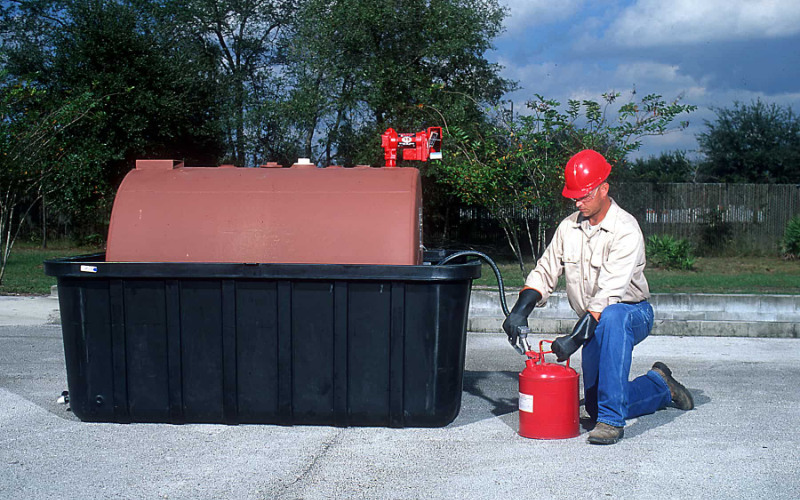
The SPCC rule, from EPA regulations under 40 CFR part 112, applies to facilities that store oil above certain thresholds and could reasonably discharge to waterways. It requires containment that can hold the contents of a container failure, with allowance for rain when storage sits outdoors, and it requires a written plan for how the facility prevents and responds to spills.
40 CFR 264.175: hazardous waste containers
Container storage areas for hazardous waste follow a different rule, 40 CFR 264.175, which in general terms calls for a sloped or sump-equipped base that keeps containers out of standing liquid and containment sized to a share of the volume stored. Many state and local rules add their own requirements on top of both.
The practical takeaway: which rule applies depends on what you store, and the final read belongs to your EHS officer, engineer, or local authority. What the rules share is the concept this page covers, sized containment under and around your storage.
The Factors That Drive Containment Selection
| Factor | What to establish | Why it matters |
|---|---|---|
| What is stored | Oil, hazardous waste, chemicals, or water | Determines which rule applies and what the containment material must resist |
| Largest container | The single biggest drum, tote, or tank in the area | Containment volume is commonly tied to holding the largest container's contents |
| Total volume stored | Everything in the containment area combined | Some rules size containment as a share of the total, whichever measure is greater |
| Indoors or outdoors | Whether rain can reach the containment | Outdoor containment commonly needs freeboard, extra capacity for precipitation |
| Handling and access | Forklift traffic, dispensing, inspection routine | Drives the format: pallet, tray, berm, or lined area |
These factors describe how the rules think, not a sizing procedure. Your site's required volumes come from your engineer, EHS officer, or authority having jurisdiction.
Matching Containment Products to the Requirement
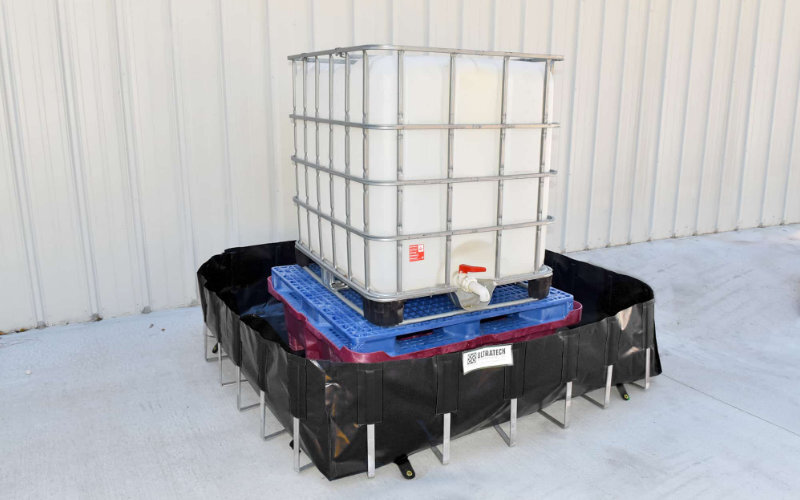
Once the factors above are established, the product choice usually falls out naturally. Drums and small containers sit on spill containment trays & pallets with built-in sumps. Equipment, vehicles, and larger tanks are surrounded by containment berms, which scale to the footprint. Permanent containment areas are sealed with containment liners matched to the stored chemical. Each product page lists its sump or containment capacity, which you compare against the figure your engineer sets.
Containment That Helps You Meet the Rule
Shop Spill Containment
Secondary Containment FAQs
What does SPCC require for secondary containment?
At the concept level, the SPCC rule requires facilities storing oil above its thresholds to provide containment that would hold the contents of a container failure before it can reach soil or water, with extra capacity for rain when storage is outdoors, and to document the approach in a written plan. The specifics depend on your storage and site, so the exact requirement for your facility comes from your engineer or EHS officer.
How much containment volume do I need?
Containment volume is commonly tied to two measures: the contents of the largest single container in the area, and a share of the total volume stored, with the rules generally requiring whichever is greater, plus freeboard for rain outdoors. The figure for your site depends on which rule applies and what you store, so have your engineer or authority having jurisdiction set it, then match products to that number.
Does my facility need an SPCC plan?
Under EPA rules, SPCC plans are generally required for facilities that store oil above the rule's aggregate thresholds and could reasonably discharge to waterways, which captures many tank farms, generators with fuel storage, and maintenance operations. Whether your facility crosses the line depends on your storage totals and location, so confirm with an SPCC-qualified professional rather than assuming either way.