
Drum Spill Containment
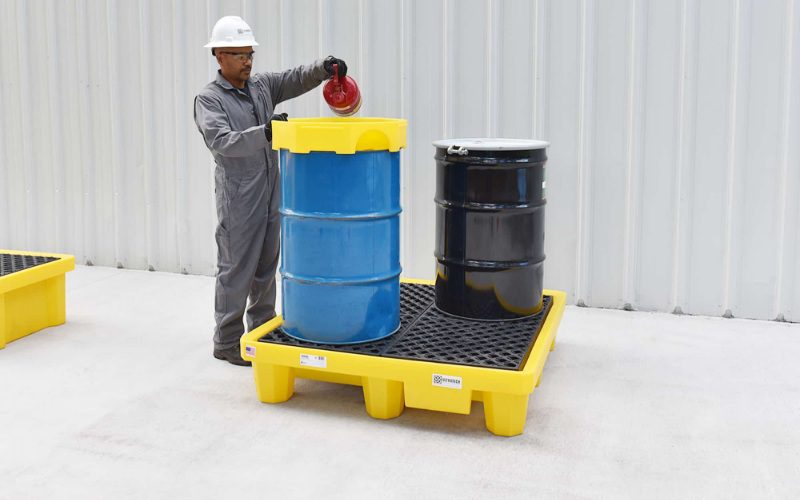
Drum Spill Containment for 55 Gallon Drums
Sized Sumps With Forklift Access
Drum containment catches leaks and spills before they reach the floor, the drain, or the soil, which is why regulators expect stored drums to sit on secondary containment. Our drum spill containment pallets hold one to four or more 55 gallon drums over a built-in sump, with forklift access for handling. Browse the range below, or start at the spill containment hub to compare every containment type.
Browse drum containment pallets below, or shop the full spill containment range.
Shop Drum Containment
Shop Spill ContainmentDrum Containment Configurations
| Configuration | Holds | Best for |
|---|---|---|
| 1-drum pallet | A single 55 gallon drum | Point-of-use storage next to the work |
| 2-drum pallet | Two drums side by side | Small storage areas and paired products |
| 4-drum pallet | Four drums in a square or inline row | Main drum storage areas and stocked chemicals |
| Dispensing and stacking units | Drums positioned for dispensing or racked vertically | Pouring stations and tight floor space |
Each unit's sump capacity, dimensions, and load rating are listed on its product page. Match the sump to your containment requirement before you buy.
Built for the Storage Area, Not Just the Spill
- Built-in sumpLeaks and drips collect below the deck instead of spreading across the floor or reaching a drain.
- Chemical-resistant polyethyleneStands up to a wide range of stored products without corroding like steel decking.
- Forklift accessPallet designs with fork pockets move loaded, so containment does not slow handling.
- Removable gratesLift the deck to inspect and clean the sump without moving the drums.
- Supports SPCC complianceSized sumps help you meet secondary containment requirements; your EHS officer makes the final call.
- Modular footprintsCombine 1, 2, and 4-drum units to cover the storage area you actually have.
Where Drum Containment Is Used
- Chemical and oil storage rooms: the classic SPCC-driven use, drums stored over sumps full time.
- Manufacturing floors: point-of-use drums for coolants, oils, and process chemicals.
- Maintenance shops: lubricants and solvents stored where they are used.
- Agriculture: pesticide and fertilizer drums kept out of soil and water contact.
- Waste staging: used oil and waste chemicals held safely until pickup.
How to Choose Drum Containment
- Count your drums: match the pallet configuration to how many drums actually sit in the area, and leave room to grow.
- Check the sump against your requirement: EPA rules commonly referenced for containment call for holding 10 percent of the total stored volume or 100 percent of the largest container, whichever is greater. Compare that to each unit's listed sump capacity, and confirm the requirement for your site with your EHS officer.
- Confirm chemical compatibility: match the pallet material to what the drums hold, using the product page and the manufacturer's compatibility data.
- Plan the handling: if drums move by forklift, choose units with fork access so containment never gets skipped for convenience.
- Zoom out: for berms, trays, and larger containment, start at the spill containment hub.
Related Containment
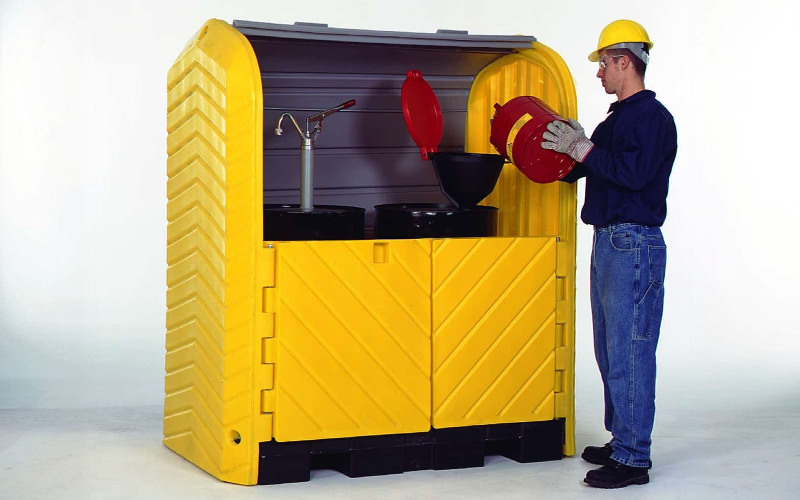 Secondary Spill Containment
The hub for every containment type, from trays to berms and liners.
Secondary Spill Containment
The hub for every containment type, from trays to berms and liners.
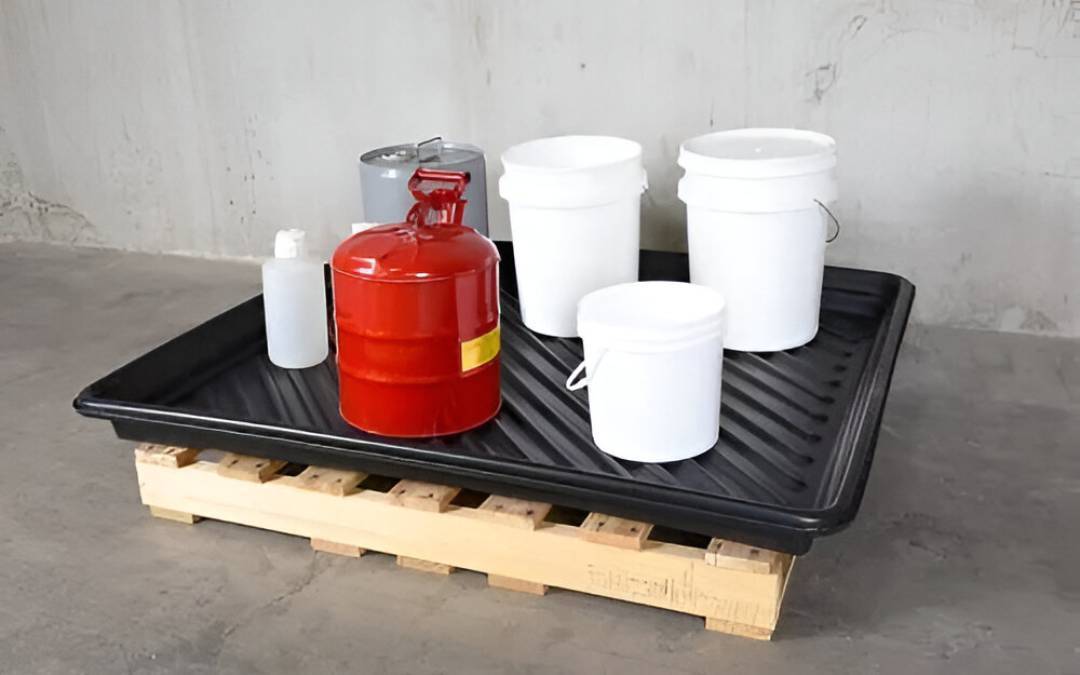 Spill Trays & Pallets
Low-profile trays and pallets for smaller containers and parts.
Spill Trays & Pallets
Low-profile trays and pallets for smaller containers and parts.
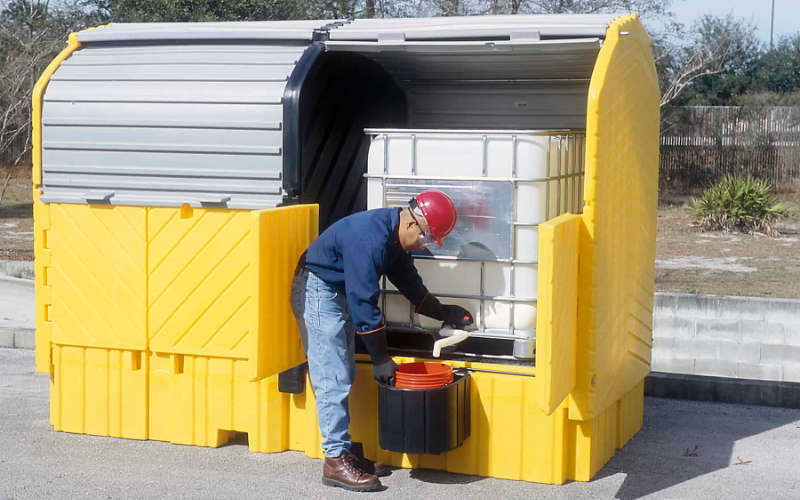 IBC Spill Containment
Containment sized for 275 gallon totes and dual-IBC storage.
IBC Spill Containment
Containment sized for 275 gallon totes and dual-IBC storage.
Working through SPCC requirements?
See what the rule covers and how containment products help you meet it.
Drum Containment FAQs
How many drums fit on a containment pallet?
Drum containment pallets commonly come in 1, 2, and 4-drum configurations for standard 55 gallon drums, with inline low-profile units and stacking systems covering larger counts. Match the configuration to the number of drums actually stored in the area, and combine units as the count grows.
What sump volume do drums require?
EPA rules commonly referenced for secondary containment call for holding at least 10 percent of the total volume stored or 100 percent of the largest single container, whichever is greater. For 55 gallon drums that usually means the sump must hold at least one full drum. Check each unit's listed sump capacity against your requirement, and confirm the rule that applies to your site with your EHS officer.
Are drum pallets forklift accessible?
Many drum containment pallets are built with forklift pockets so a loaded pallet can be moved without unloading the drums, while low-profile trays are positioned by hand and loaded in place. Whether a specific unit is forkliftable is listed on its product page, so check before you plan your handling around it.