How to choose spill containment
- Identify the liquids and containers. Note whether you store oils, fuel, corrosives or other hazardous materials, then count the drums, IBC totes, tanks and small containers to contain and where they sit today.
- Decide where containment goes. For indoor drum storage, loading docks and warehouses, look at spill pallets, decks and trays. For yards, vehicle fueling and temporary job sites, consider flexible berms or rigid-wall containment.
- Confirm capacity. Use your SPCC plan, SDS sheets and local regulations to size the containment volume. Many facilities plan for at least the capacity of the largest container plus freeboard, with extra capacity for rainfall outdoors where required.
- Add response and stormwater protection. Spill kits, absorbents, drain covers, inlet filters and booms keep spills that do escape out of soil and storm drains.
Match containment to the container
- Drums and small containers: spill pallets, decks and trays sized by drum count. See spill pallets and decks and spill trays.
- IBC totes: single or twin IBC spill pallets, or hard tops when totes are stored outdoors.
- Tanks, vehicles and equipment: a berm or lined containment area. Drive-over berms suit tankers, frac tanks and fueling areas, while collapsible and foam wall berms set up fast for maintenance work. See containment berms.
- Drum handling: funnels, sumps, drum racks and overpack drums. See drum containment and handling.
- Spill response: absorbents, drain seals, filter booms and pop-up pools. See spill response and absorbents.
Portable and temporary containment
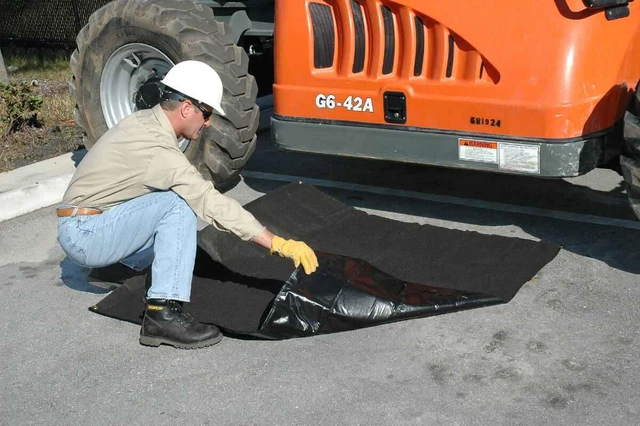
Not every containment need is permanent. Portable systems set up on site, hold liquid for the length of the job and pack down when the work moves. They are common on rental fleets, construction sites, remote installations, fuel transfer points, tanker loading and spill response staging. Diesel generators, whether standby units or rentals, sit on a base fuel tank that needs containment underneath; a generator berm sized to the fuel volume is the usual answer for pads, rooftops and remote sites.
Containment and compliance
- SPCC secondary containment: capture leaks from aboveground containers such as drums, totes and small fuel tanks as part of a Spill Prevention, Control and Countermeasure plan. Our guide to SPCC secondary containment requirements explains the rules in plain language.
- Stormwater: drain covers, inlet filters and berms keep spills and sediment out of storm drains and outfalls.
- Good housekeeping: pallets, trays and absorbents keep aisles and work areas free of slippery liquids.
- Chemical storage: trays and sumps under cabinets, racks and small containers capture repeated leaks.
Requirements come from your SPCC plan, local fire and building codes and your insurer, and they are not the same everywhere. Your EHS manager, engineer or inspector decides what applies to your site. For lined areas around tanks and equipment pads, see secondary containment liners; for rail loading and unloading, see railroad containment. Send us your container types, counts and a rough layout and we will match products to the volume you need.
Spill containment questions
Does the SPCC rule cover every liquid I store? No. SPCC applies to facilities that store oil above certain thresholds and could reasonably discharge to waterways. Hazardous waste containers fall under a different federal rule, which in general terms calls for a sloped or sump-equipped base that keeps containers out of standing liquid. State and local rules can add more, so your EHS officer, engineer or local authority has the final word.
Should containment hold the largest container or the total volume? Containment volume is commonly tied to the largest container in the area, but some rules size it as a share of the total stored, whichever measure is greater. Each product page lists its sump or containment capacity; compare that figure with the volume your engineer or authority having jurisdiction sets.
What if a spill risk does not fit a pallet or a berm? Smaller pieces cover the gaps: fuel tank containment sumps, IBC and drum funnels, rack sumps, transformer trays, safety cabinet bladder systems and utility trays. They keep leaks off floors, out of cabinets and away from walkways and racks. See miscellaneous containment.
Can a damaged containment berm be repaired? UltraTech sells berm repair kits, including one with a heat gun and a 22 oz PVC kit, plus containment berm repair material and PE repair tape. Modular berms take a replacement liner, a common request for aging units, and Foam Wall Plus berms take replacement foam.
What are containment liners made of? Liner fabrics include Elvaloy, polyurethane, linear low-density polyethylene (LLDPE) and PVC, chosen to resist punctures, UV and chemical attack. To choose one, note the liquid stored on the liner, the size you need and whether storage is short or long term. Liners are typically designed for short-term storage.
Does UltraTech make safety products besides containment? Yes. The range includes corner protectors, I-beam protectors, magnetic rack protectors, a heavy-duty hose stand, drain marker kits and ADA detectable warning pads. Browse safety and accessories for the pieces that go with a containment area.