


Secondary Containment for Fuel & Diesel Tanks

Fuel Tank Containment Solutions
Secondary Containment Solutions for Fuel and Diesel Tanks
Secondary containment for fuel tanks is essential for facilities handling, storing, or transferring fuel. These solutions, placed under steel tanks, pillow tanks, and other systems, swiftly contain leaks or spills. Built with robust materials, they support SPCC plans and help reduce environmental risk. Confirm required containment volume and material compatibility with your SPCC plan and the engineer or EHS manager who certifies it.
Looking for Secondary Containment solutions? We can help! Call us at 1-863-261-8388 or contact us to discuss your needs.
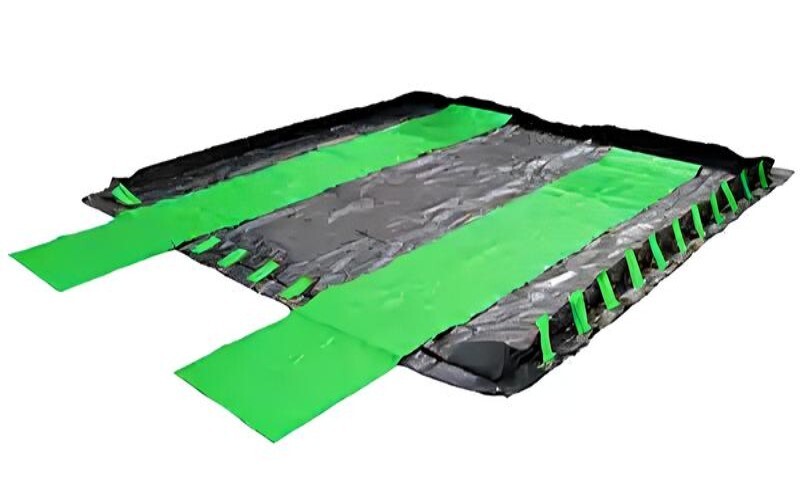
Spill Containment Berms
Spill containment berms are flexible, durable solutions for secondary containment under tanks and fueling vehicles. Made from robust fabrics, they're easy to transport, foldable for storage, quick to set up in emergencies, and resistant to various chemicals, ensuring reliable protection. Their design also allows for customization in size and shape, accommodating diverse site needs.
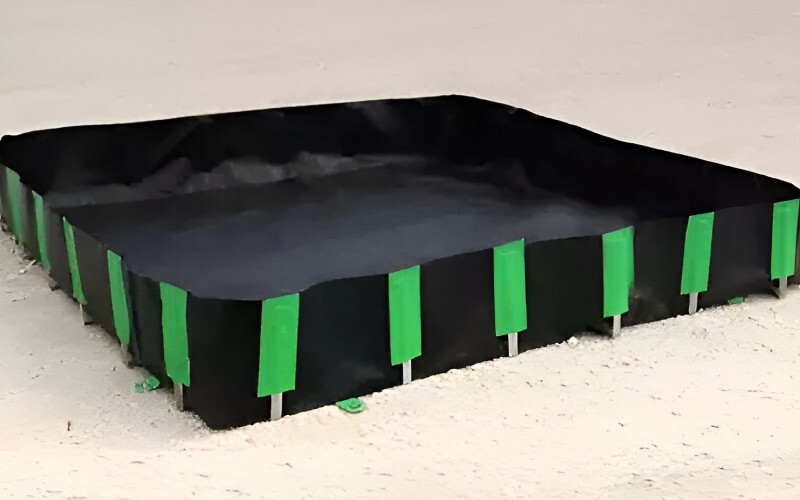
Diesel Fuel Containment Berms
Explore why diesel fuel containment berms are essential for maintaining compliance and preventing leaks at your site. These robust barriers ensure environmental safety by effectively containing spills, providing peace of mind and regulatory adherence for your operations. Built for durability, they are designed to withstand challenging site conditions.
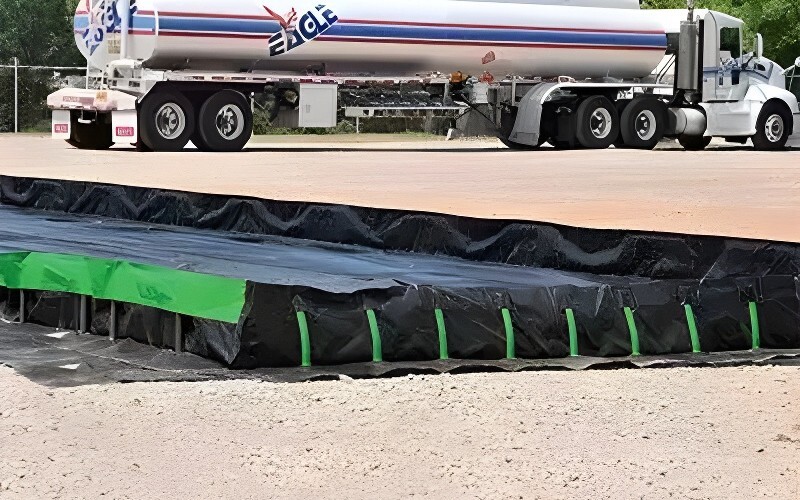
Drive Through Berms
Discover Drive Through Berms designed for safe containment of tankers, drums, vehicles, and frac tanks. With self-rising foam walls, they offer easy and reliable storage solutions, available in both standard and custom sizes. Built to withstand heavy traffic and rough conditions, these berms are durable for high-activity sites and help prevent environmental contamination by capturing potential leaks and spills.

Spill Containment Liner
Explore our spill containment liners, designed to safeguard sites handling hazardous materials like fueling areas, deicing stations, and construction sites. Crafted from durable materials such as Elvaloy, Polyurethane, LLDPE, and PVC, these flexible liners fit various specifications and are ideal for placement under fuel tanks, pillow tanks, and more, ensuring effective protection against spills and leaks.
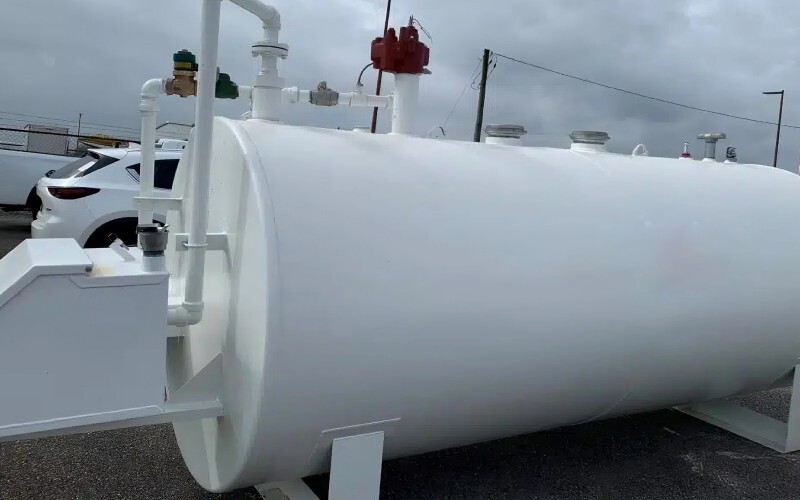
Dike Tanks
Explore our Above Ground and Underground Steel Tanks, built from high-quality steel to UL 142 (aboveground) and UL 58 (underground) standards, designed for secure storage of hazardous liquids like petroleum and chemicals, ensuring durability and safety for flammable materials. Available in multiple sizes, these tanks provide versatile storage solutions for both industrial and commercial applications.
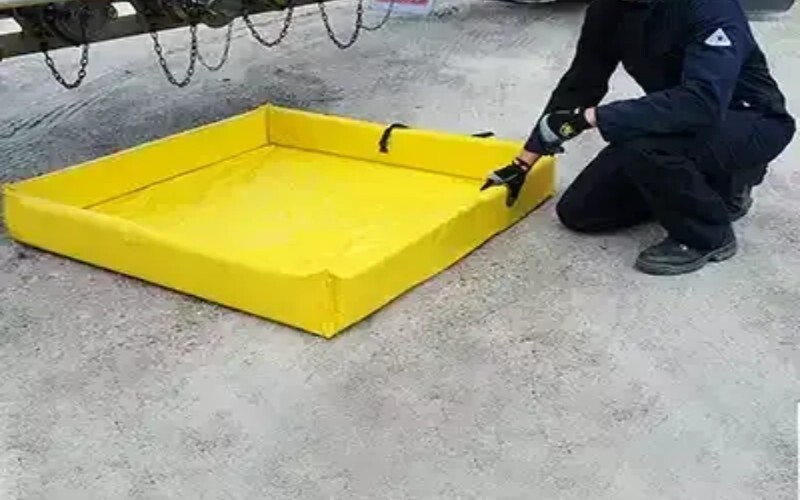
Spill Basins
Explore our flexible spill basins – perfect for storing small equipment, paint cans, pails, bottles, and tools. Quick to deploy, our mini spill containment berms offer swift, hassle-free solutions for emergencies and temporary storage needs. Ideal for fast and economical containment whenever you need it, they are durable and reusable for multiple applications.
Frequently Asked Questions
What secondary containment options are there for fuel and diesel tanks?
This page covers five: spill containment berms that wall in a tank or a fueling area, drive-through berms that tankers and vehicles can drive into, spill containment liners that go under the tank pad, spill basins for smaller tanks and drums, and steel tanks built for petroleum storage. Most fuel sites pair a berm with a liner.
Does a diesel tank need secondary containment?
It depends on how much oil the site stores and where. The Spill Prevention, Control, and Countermeasure (SPCC) rule, from EPA regulations under 40 CFR part 112, applies to facilities that store oil above certain thresholds and could reasonably discharge to waterways, which captures many tank farms, generators with fuel storage, and maintenance operations. Confirm with your engineer or the authority having jurisdiction, and see SPCC secondary containment requirements.
How much should the containment hold?
Containment is commonly sized to hold the contents of the largest single tank or container in the area, with extra capacity, called freeboard, for rain when it sits outdoors. Some rules size it as a share of the total volume stored, whichever is greater. Your SPCC plan and the engineer who certifies it set the figure for your site.
Berm, liner or basin: which one do I need?
A berm is a wall that holds a spill around a tank, a vehicle or a fueling area. A liner goes under the tank pad; liners for fuel are usually paired with a berm wall, so the escaped volume is held rather than simply kept off the ground. A basin is a rigid tray for a small tank, drum or tote: Peabody ProChem containment basins run from 33.5 to 1,650 gallons and Norwesco basins from 125 to 1,300 gallons, see tank containment.
What liner materials work with fuel?
Our containment liners come in Elvaloy, polyurethane, linear low-density polyethylene (LLDPE), polyvinyl chloride (PVC) and polypropylene. For fuel, hydrocarbon exposure decides the material, along with the UV and weather load of an outdoor tank pad, so tell us the fuel and we will match the fabric to it. Spill containment liners are typically designed for short-term storage; see secondary containment liners.
Can trucks drive into the containment?
Yes. Drive-through berms are made for tankers, vehicles and frac tanks, with self-rising foam walls. Rapid Rise berm walls stay low for easy access and rise as the liquid level increases during a spill. See flexible containment.
What goes under a berm?
A ground liner protects the berm floor from rocks and gravel. Each ground liner is typically 1 to 4 feet larger than the berm, and it is made from 18.5 oz/sq. yd. polyester-reinforced PVC. See ground liners for spill containment.
Looking for Secondary Containment solutions? We can help! Call us at 1-863-270-8118 or contact us to discuss your needs.