
Cistern Water Tanks
Cistern Tanks
Rain Water Cistern Tanks
Cistern water tanks are essential for efficiently harvesting, storing, and repurposing rainwater. Suitable for businesses, homes, and government buildings, these tanks provide secure water storage. They can be customized with pipes, fittings, and connections for easy integration with downspouts, pumps, and sprinkler systems.
Looking for water storage solutions? We can help! Call us at 1-863-270-8118 or contact us to discuss your needs.



What Is a Cistern Tank?
A cistern tank is a vessel that holds water captured from somewhere other than a municipal line, most often rainwater from a roof, and keeps it available until you need it. That is the whole distinction. A water cistern tank is defined by what fills it and what it is for, not by what it is made of, so you will find cisterns in plastic, fiberglass, steel and flexible fabric, sited above ground and buried, from a few hundred gallons up to municipal scale.
The practical difference between a cistern and a general-purpose water tank is that a cistern is part of a supply, not just a container. It has an inlet fed by a catchment or delivery source, an overflow that has to go somewhere sensible, and an outlet feeding whatever the water is for. Those three connections drive most of the decisions on this page. For the mechanics of how the whole arrangement works, start with how does a cistern work.
Who Uses Cistern Tanks
Rural and off-grid properties without a reliable well or municipal connection use cisterns as primary supply, filled by rainwater or by hauled water delivery. Farms and growers use them to hold irrigation water through dry stretches. Homeowners on municipal water use them to take outdoor demand off the meter, and to keep a reserve for outages. Commercial and government buildings use them for irrigation, cooling makeup, washdown and stored emergency supply. The requirement is the same in every case: hold water now, deliver it later, reliably.
Above Ground and Underground Cistern Tanks
Placement is usually the first real decision, because it narrows the material options before you get to them. Both configurations work. They fail in different ways and cost money at different points.
Above Ground Cistern Tanks
An above ground cistern is faster and cheaper to install, and it stays accessible for the life of the system. You can inspect it, clean it, repair a fitting and read the level without digging anything up. If the tank can sit higher than the point of use, it may gravity feed and skip the pump entirely. An outdoor cistern also gives you room to change your mind later, since relocating a surface tank is a day of work rather than a project.
The costs are exposure and footprint. Sunlight degrades unprotected plastic over time, which is why UV stabilization matters on any above ground cistern tank, and standing water in a sunlit vessel encourages algae. In freezing climates a surface tank needs insulation, heat, or a drawdown plan for winter. And it occupies ground you might want for something else, which is the usual reason a garden cistern or backyard cistern ends up smaller than the roof could actually fill.
Underground and Buried Cistern Tanks
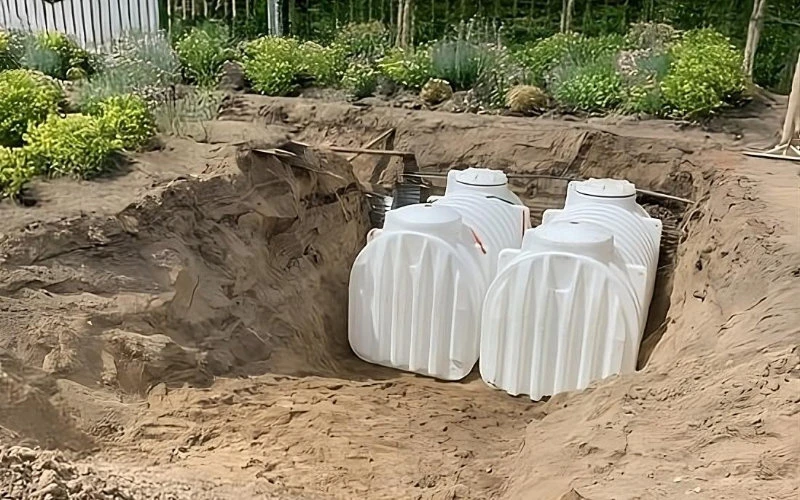
An underground cistern tank frees the surface completely and puts the water somewhere stable. Below the frost line the contents stay cool, dark and protected from both freezing and sunlight, which slows algae growth and takes the seasonal problems off the table. On sites where the tank cannot be visible, whether for planning reasons or aesthetic ones, burial is often the only workable answer.
The costs move to excavation and access. An in ground cistern needs a pump for delivery, since gravity now works against you. It needs a tank rated for burial, because a vessel designed to stand on a pad will not survive soil load and cannot be substituted. Site conditions decide feasibility more than preference does: water table depth, soil type, frost line and whether equipment can physically reach the location. And once it is in, anything that goes wrong is a much larger job than it would have been on the surface.
Choosing Between Them
Choose above ground when access, budget and installation speed matter most, when the site has room, and when the climate is mild enough that exposure is manageable. Choose underground when surface space is genuinely unavailable, when the tank must not be visible, or when freezing would otherwise force you into heating a surface vessel every winter. If the site is workable either way, above ground is the lower-risk default, because everything about it stays fixable.
Describe the site and we will tell you which configuration fits and what it will take. Material options for both are in the cards above, including plastic cistern tanks and cistern liners where an existing structure is being converted.
Cistern Tank Materials
There is no single best material for a water storage cistern. Each one earns its place on a particular kind of site, and the right choice usually falls out of three things you have already decided: whether the tank sits above ground or buried, how much capacity you need, and what the water is going to be used for. Here is what each option is genuinely good at.
Plastic
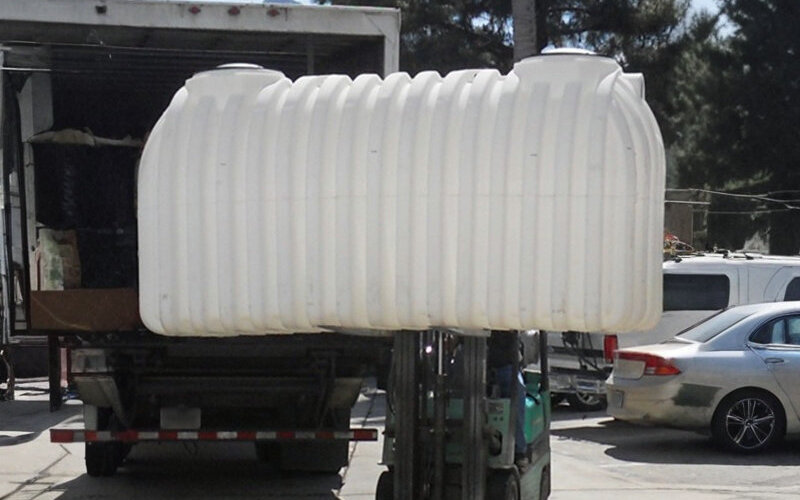
Polyethylene is the most common cistern material and the usual starting point. It is light enough to place without heavy equipment, it does not corrode, and it costs less per gallon than the alternatives at residential and light commercial sizes. Above ground versions are UV stabilized for sun exposure. Burial-rated versions are built differently to carry soil load, so the two are not interchangeable and you have to specify which one you need. See plastic cistern tanks.
Liners
A liner is the answer when the structure already exists. Old concrete cisterns, block-built chambers and masonry tanks are frequently sound in every respect except that they no longer hold water, and a fitted liner restores that without demolition. This is usually the cheapest route to a large capacity on a property that has an inherited cistern sitting unused. See cistern liners.

Flexible and Bladder
A flexible cistern is a fabric bladder that lies flat and fills to whatever height the space allows. It suits low-clearance locations, crawl spaces and temporary installations, and it ships and stores in a fraction of the volume of a rigid vessel. It gives up the durability and the serviceability of a hard tank, so it is the right answer for constrained or short-term sites rather than a permanent primary supply. See flexible tanks.

Fiberglass
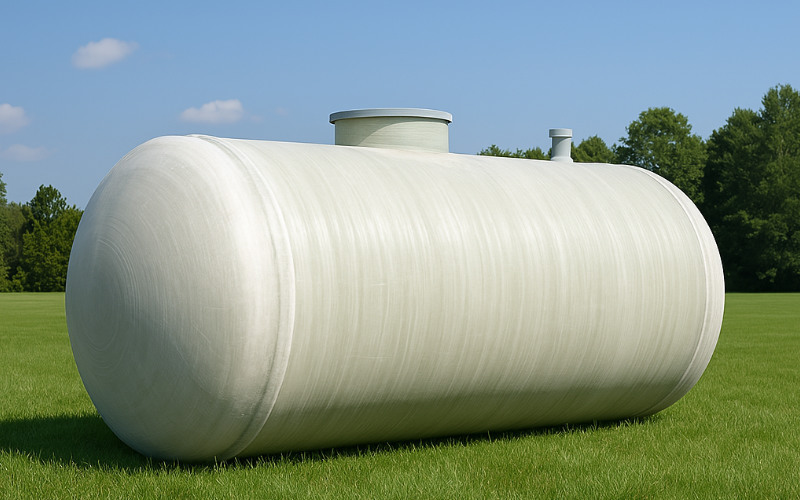
Fiberglass is strong for its weight and holds its shape under external load, which is why it turns up on buried installations where soil pressure is the governing concern. It does not corrode and it tolerates a wider range of stored contents than polyethylene. It costs more than plastic, and it is the material to look at when the site conditions or the contents rule plastic out rather than as a general upgrade. See fiberglass cistern tanks.
Steel
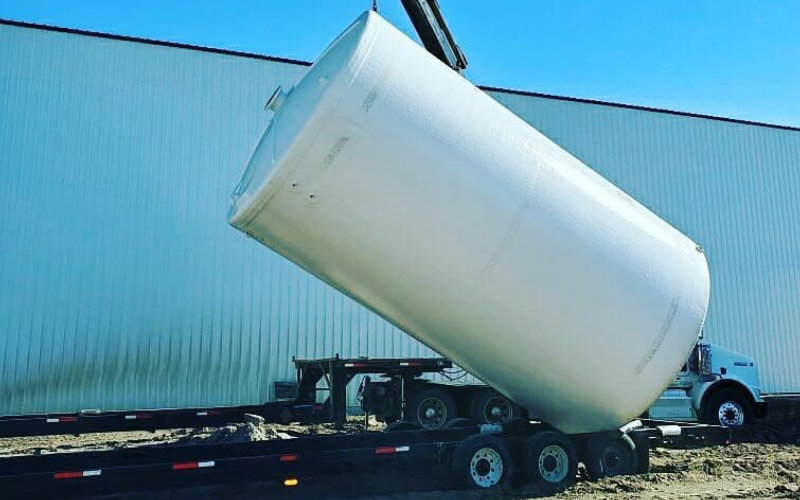
Steel is where you go when the capacity gets large. Bolted and corrugated construction assembles on site, which means the finished tank is not limited by what can be delivered on a truck, and the same approach scales from agricultural sizes up to municipal. Steel cisterns depend on their coating or liner for water contact, so the interior specification matters as much as the shell. The steel option currently stocked is the 5,000 gallon tank kit. Larger bolted and corrugated builds are specified and quoted per project rather than stocked, so call for anything above that.

Narrowing It Down
If you are placing a new tank above ground at residential or light commercial scale, plastic covers most situations. If you are burying it, the decision is between burial-rated plastic and fiberglass, and the site conditions usually settle it. If you need capacity beyond what ships in one piece, you are looking at steel. If you already have a structure that used to hold water, start with a liner before you consider replacing anything. Where the water is going matters too, since intended use affects which specifications you need to confirm before ordering.
Tell us the site and the intended use and we will narrow it down with you, including the specifications worth confirming for your application.
Sizing a Cistern Tank
Sizing comes down to three numbers: how much water arrives, how much you draw, and how long you need to go between refills. Get any one of them badly wrong and the tank is either overflowing most of the year or empty when you need it. The third number is the one people underestimate. A cistern is not sized to your average demand, it is sized to the longest dry stretch you need to ride out, because that is the gap the stored water exists to cover.
What fills the tank sets the ceiling. On a rainwater-fed cistern that is roof area and local rainfall. On a delivery-fed cistern it is how often a truck can reach you and what it carries, which makes the sizing question closer to a logistics problem than a hydrology one. Work through the method in what size cistern do I need, and if your supply is rainwater, run your roof and location through the rainwater harvesting calculator to get the volume available before you settle on a capacity.
Once you have a number, call us before you order. Available capacities are not continuous, they come in the sizes each manufacturer produces, and the practical choice is usually between the nearest two.
Related Guides and Tanks
Cistern Tank FAQs
What is the difference between a cistern and a water tank?
Every cistern is a water tank, but not every water tank is a cistern. The word describes a role rather than an object. A cistern collects water from a catchment or a delivery source and holds it as a supply, which is why it always has an inlet, an overflow and an outlet feeding something. A general water tank might be a haul tank on a trailer, a process vessel, or a buffer between a pump and a system, none of which are storing a supply for later use. When someone searches for a cistern tank they are almost always describing stored supply for a property, which is what the tanks on this page are built for.
Can a cistern store drinking water?
Some cistern tanks are built and rated for potable water and some are not, and the difference is specific to the model rather than to the material. Do not assume a tank carries a potable rating because it is plastic or because a similar product does. The same caution applies to everything in contact with the water, meaning the liner where one is used, the fittings and the pipework, since a rated tank on unrated components does not give you a rated system. Treatment is a separate requirement on top of that, because water arriving from a roof or a delivery is not drinking water simply because the vessel is rated to hold it. Rules on potable cistern supply vary considerably by state and locality. Tell us the intended use and we will confirm which specific tanks carry the rating you need and what the manufacturer documentation states.
Should a cistern be above or below ground?
Above ground is the lower-risk default wherever the site allows it, because it is cheaper to install, it stays accessible for inspection and repair, and it can gravity feed if the tank sits above the point of use. Underground is the right answer when surface space is genuinely unavailable, when the tank must not be visible, or when freezing would otherwise mean heating a surface vessel every winter, and it costs you excavation, a pump and much harder access if anything needs attention later. One thing to be clear on: burial ratings are specific to the model. A tank designed to stand on a pad cannot be buried, whatever it is made of. The placement section above walks through both configurations in detail.
Looking for water storage solutions? We can help! Call us at 1-863-270-8118 or contact us to discuss your needs.